
Why Steel Weight Calculation Matters: Our 38x38x1.8 mm Galvanized Tube Lesson
In steel trading, one small mistake in calculation can eat the full profit of an order. I learned this the hard way. In this post I am sharing a real order we handled: 1,300 pieces of 38 x 38 x 1.8 mm MS square tubes, hot-dip galvanized. I hope it helps other traders, fabricators, contractors and buyers avoid the same mistake.
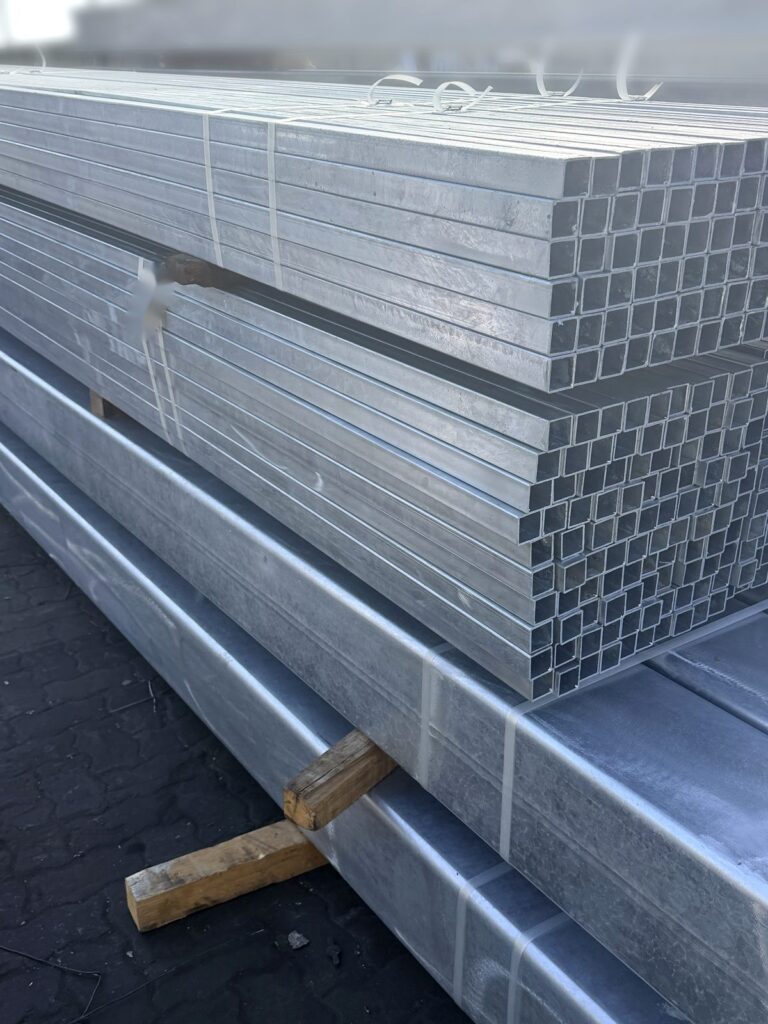
The order: 1,300 pcs of 38 x 38 x 1.8 mm tubes
We got an online inquiry for about 1,300 pieces of MS square tube, size 38 x 38 mm, thickness 1.8 mm, with hot-dip galvanizing. We decided to buy steel coil, get it slit and made into tubes at a tube mill, and then send the tubes for galvanizing.
We calculated the coil quantity from the theoretical weight of the tubes. On paper everything looked fine. In real production, it was different.
Mistake 1: we did not count the scrap
When the coil was slit and the tubes were made, part of the material went to scrap: slitting edge trim, end cuts, and normal production loss. In our case the scrap was around 5–8%.
Our first coil could not make the full quantity. We had to buy another coil to finish the order. That was extra cost which we had not planned for.
Mistake 2: we forgot the zinc weight
After the tubes came back from the galvanizing plant, they were heavier than we expected. The reason is simple: hot-dip galvanizing puts a zinc layer on the steel, inside and outside of the tube. That zinc has weight.
Why does this matter for cost? Many galvanizing plants charge by the weight after galvanizing. If you sell to your customer by the piece, but you pay the galvanizer by the kilo, every extra kilo of zinc comes from your own margin. We did not include this in our price.
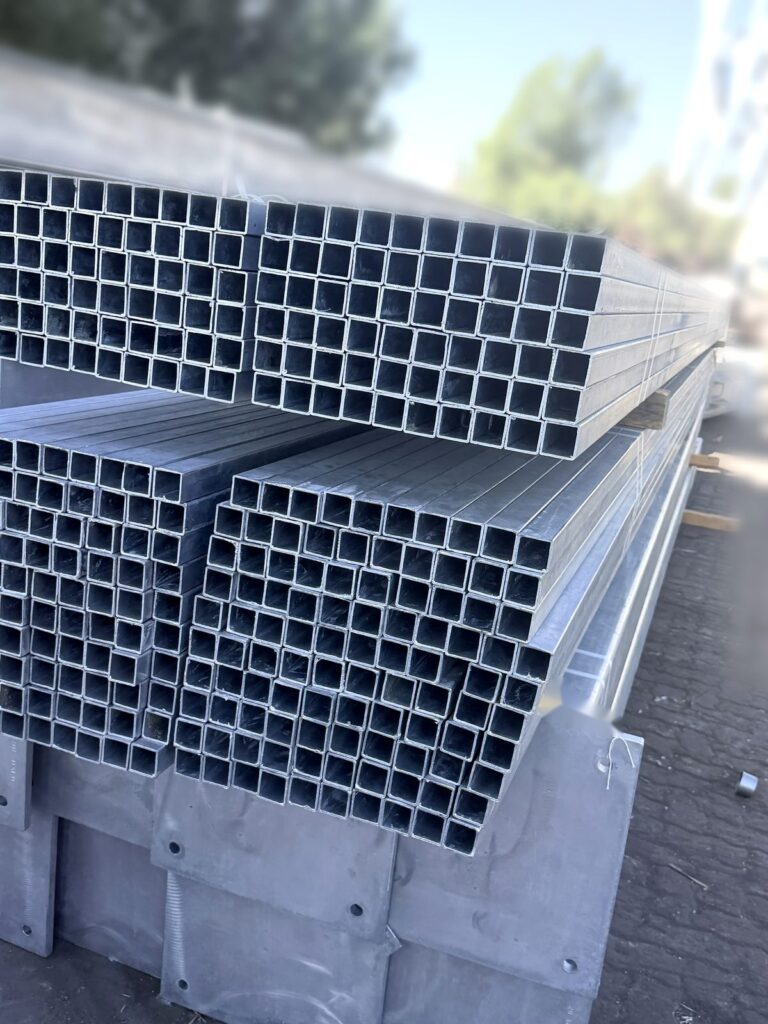
How to calculate it properly (worked example)
Here is how I calculate this order now. The figures below are theoretical estimates, using steel density 7.85 g/cm³ and a standard 6 m tube length.
Step 1: Bare steel weight of the tube
Formula for square tube (sharp corners):
Weight (kg/m) = [A² − (A − 2t)²] × 0.00785
where A = side (mm) and t = thickness (mm).
- 38 x 38 x 1.8 mm = [38² − 34.4²] × 0.00785 ≈ 2.05 kg/m
- One 6 m length ≈ 12.3 kg
- 1,300 pcs ≈ 16.0 tons of finished bare tube
Step 2: Add the scrap allowance
Coil needed = finished weight ÷ (1 − scrap %).
- At 5% scrap: 16.0 ÷ 0.95 ≈ 16.8 tons of coil
- At 8% scrap: 16.0 ÷ 0.92 ≈ 17.3 tons of coil
So you need roughly 0.8 to 1.4 tons more coil than the theoretical weight. If you buy only 16 tons, you will be short, like we were.
Step 3: Add the zinc weight
- Surface area (outside + inside) ≈ 0.152 + 0.138 = 0.29 m² per metre
- For steel 1.5–3 mm thick, ISO 1461 asks for a minimum average coating of about 55 µm, which is around 395 g/m² of zinc
- Zinc ≈ 0.29 × 0.395 ≈ 0.11 kg/m, about 5.6% of the steel weight
- Per 6 m piece: about 12.3 kg → 13.0 kg after galvanizing
- For 1,300 pcs: about 0.9 tons of extra weight, at the minimum coating
This is the minimum. In real galvanizing, thin tubes often pick up more zinc depending on the steel chemistry, bath time and the plant. Always ask your galvanizer for their usual weight gain for your size.
Taking responsibility with the customer
By the time we understood all this, we had already committed to the order. These were our own estimation mistakes, not the customer’s and not the factory’s.
I called the customer and explained honestly what happened: the scrap, the extra coil, and the zinc weight we missed. It was not an easy call. But the customer understood, and we found a fair way forward together. For me this was also a lesson: when a problem comes, be open and take responsibility. It keeps the relationship strong.
My checklist before quoting any tube order
- Theoretical weight: size, thickness, length, quantity.
- Coil yield and scrap: add 5–8% (or your mill’s real figure).
- Galvanizing weight: add the zinc weight, and check how the galvanizer charges.
- Selling basis: are you selling by piece or by kg? Price it accordingly.
- Transport: number of trips, truck size and destination.
- Record estimated vs actual: after every order, compare and adjust your next calculation.
Why we built SteelCal
This order is one of the reasons we started SteelCal. I wanted a quick way to check steel weights before quoting, not after production. A weight calculator gives you the theoretical starting point. Then you add your scrap, coating and transport on top. Both parts are needed.
For the formulas behind every section, see our guide How to Calculate Metal Weight. If you want to see a bigger tube job from start to finish, read how we manufactured 52 tons of custom 50×50 steel tubes.
Frequently asked questions
What is the weight of a 38 x 38 x 1.8 mm square tube?
About 2.05 kg per metre in theory, or about 12.3 kg for a 6 m length (bare black steel). Actual weight can be slightly lower because of rounded corners and mill tolerance.
How much weight does hot-dip galvanizing add to a tube?
For a 38 x 38 x 1.8 mm tube, at least about 5–6% based on the ISO 1461 minimum coating. In practice it is often more for thin tubes. Ask your galvanizer for their typical figure.
How much scrap should I allow when making tubes from coil?
In our experience 5–8%, from slitting edge trim, end cuts and production loss. It depends on the coil width, the strip widths and the mill.
Need galvanized tubes or a weight estimate?
Ibnee Younus Building & Construction Materials Trading Co. LLC, Dubai Industrial City. We supply MS and GI square, rectangular and round tubes, with custom sizes and galvanizing on request. Open every day, 8 AM to 7 PM.
Disclaimer: All weights and percentages in this article are theoretical estimates for general guidance only. Actual weight, scrap and zinc pick-up depend on mill tolerances, corner radius, coil width, steel chemistry and the galvanizing process. Please confirm figures with your mill and galvanizer before pricing or ordering. Calculator results on SteelCal are also theoretical estimates. This article shares our own experience; customer and supplier details are kept confidential.

Comments are closed.