
Chequered Plate
Quick answer: Chequered plate (checker or tread plate) is steel or aluminium plate with a raised diamond or teardrop pattern for slip resistance. MS chequered plate is usually 3–10 mm thick in 1.25 × 2.5 m or 1.5 × 6 m sheets. It is slightly heavier than plain plate of the same base thickness because of the raised pattern.
Buying chequered plate in Dubai or the UAE?
We supply chequered plate from stock in Dubai Industrial City. See sizes and weight charts for chequered plate or get a quote on WhatsApp (058 566 7721).
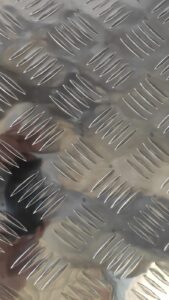
Chequered plate, also known as diamond plate, tread plate, or checkered plate, is a type of steel plate with a pattern of raised diamonds or lines on one side and a smooth reverse side. It is commonly used for flooring, stair treads, and other surfaces that require a high level of grip and traction. The chequered pattern serves to increase the plate’s skid resistance, making it useful in various applications where slip and fall accidents are a concern.
Chequered plates are typically made of mild steel or aluminum, but they can also be made of stainless steel or other materials. The pattern is typically raised, rather than indented, into the surface of the plate. The size of the chequers and the thickness of the plate can vary, and the weight of the plate can be calculated using a specific formula based on the material used
Type of Chequered Plate
There are several types of MS Chequered Plate, depending on the pattern and material used. Some common types include:
- Mild Steel Chequered Plate: This type of plate is made from low carbon steel and is commonly used for flooring, stairs, and other structural applications.
- Aluminum Chequered Plate: This type of plate is made from aluminum and is lightweight, corrosion-resistant, and has a high skid resistance. It is commonly used in marine and transportation applications.
- Stainless Steel Chequered Plate: This type of plate is made from stainless steel and is resistant to corrosion, making it suitable for use in food processing and pharmaceutical industries.
- Galvanized Chequered Plate: This type of plate is coated with a layer of zinc to protect it from corrosion. It is commonly used in outdoor and structural applications.
- Diamond Plate: This type of chequered plate has a diamond-shaped pattern, rather than the traditional raised lines or diamonds. It is commonly used in decorative applications and is often made from aluminum or stainless steel.
 Mild Steel Chequered Plate weight calculation formula
To calculate the weight of a mild steel chequered plate, you can use the following formula:
Weight (kg) = Plate Thickness (mm) x Plate Width (m) x Plate Length (m) x 7.85
For example, if you have a chequered plate that is 1 meter wide, 2 meters long, and has a thickness of 5 mm, the weight would be:
Weight (kg) = 5 mm x 1 m x 2 m x 7.85 = 78.5 kg
Keep in mind that this formula is for mild steel chequered plates and the weight may vary slightly depending on the material and manufacturing process used.
Aluminum Chequered Plate weight calculation formula
To calculate the weight of an aluminum chequered plate, you can use the following formula:
Weight (kg) = Plate Thickness (mm) x Plate Width (m) x Plate Length (m) x 2.7
For example, if you have a chequered plate that is 1 meter wide, 2 meters long, and has a thickness of 5 mm, the weight would be:
Weight (kg) = 5 mm x 1 m x 2 m x 2.7 = 27 kg
Keep in mind that this formula is for aluminum chequered plates and the weight may vary slightly depending on the material and manufacturing process used.
Stainless Steel Chequered Plate weight calculation formula
To calculate the weight of a stainless steel chequered plate, you can use the following formula:
Weight (kg) = Plate Thickness (mm) x Plate Width (m) x Plate Length (m) x 7.93
For example, if you have a chequered plate that is 1 meter wide, 2 meters long, and has a thickness of 5 mm, the weight would be:
Weight (kg) = 5 mm x 1 m x 2 m x 7.93 = 79.3 kg
Keep in mind that this formula is for stainless steel chequered plates and the weight may vary slightly depending on the material and manufacturing process used.
Galvanized Chequered Plate weight Calculation formula
To calculate the weight of a galvanized chequered plate, you can use the following formula:
Weight (kg) = Plate Thickness (mm) x Plate Width (m) x Plate Length (m) x 7.85
For example, if you have a chequered plate that is 1 meter wide, 2 meters long, and has a thickness of 5 mm, the weight would be:
Weight (kg) = 5 mm x 1 m x 2 m x 7.85 = 78.5 kg
Keep in mind that this formula is for galvanized chequered plates made of mild steel and the weight may vary slightly depending on the material and manufacturing process used.
Stainless Steel Chequered Plate weight chart
Here is a chart showing the weight of a 1220x2440mm stainless steel chequered plate based on its thickness:
Note: These values are for a 1220x2440mm stainless steel chequered plate and may vary slightly depending on the material and manufacturing process used.
I hope this information is helpful! Let me know if you have any other questions.
What is the difference between diamond plate and checkered plate?
Diamond plate and checkered plate are two types of metal plate with a pattern of raised diamonds or lines on one side. The main difference between the two is the pattern of the raised lines or diamonds. Diamond plate is a type of metal plate with a pattern of raised diamonds on one side, while checkered plate is a type of metal plate with a pattern of raised lines on one side, typically in a diamond or square shape. Both types of plate are commonly used for flooring, decorative purposes, and in construction and other industries for their durability and skid-resistant surface.
Frequently asked questions
What is chequered plate used for?
Floors, stair treads, ramps, walkways, truck beds and platforms.
How do I estimate chequered plate weight?
Use the plain plate weight (7.85 kg/m² per mm for steel) and add the pattern allowance from the supplier’s table.
Is aluminium chequered plate lighter?
Yes, about a third of the weight of MS chequered plate of the same size.

Comments are closed.